



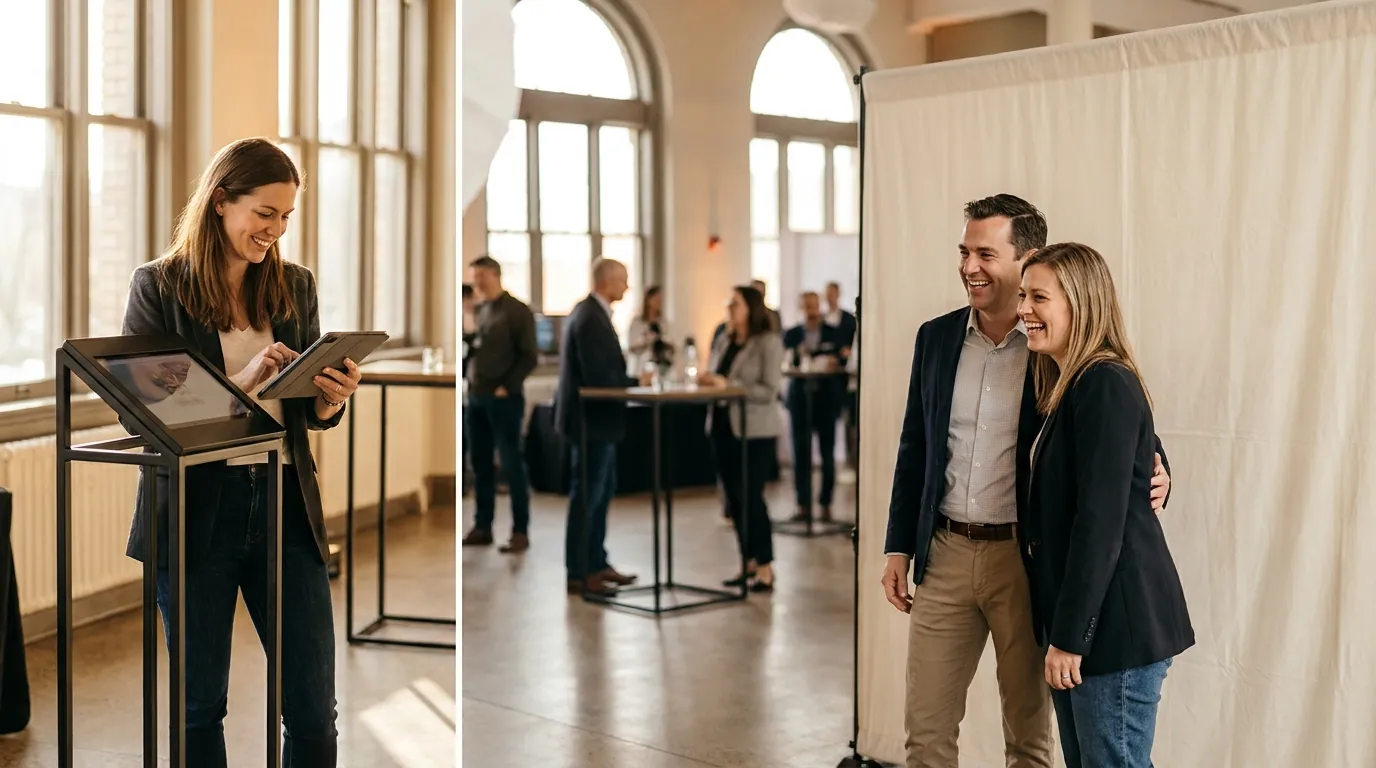
Photo booth business trends for 2027 point one way: steady demand and pickier buyers. Brands still fund live events, but they want measurable leads, AI that feels fresh, and guest data collected with clear consent. Couples want personal fun on tight budgets.
Here are seven photo booth industry trends shaping the future of photo booths, each with the evidence and one concrete action for a small booth owner.
The market: budgets hold, but 2027 is a normal year
Trend 1: Brands keep spending on events, without the 2026 boost
Part of 2026's growth was a one-off. PQ Media estimates global experiential marketing spend rose 8.3% to $138.94 billion in 2025 and expected 10.3% growth in 2026, helped by the Winter Olympics, the FIFA World Cup and US midterm campaigns. 2027 has none of those.
Demand is not falling: in Event Marketer's EventTrack 2026 survey, brands planned to spend 8 to 11% more on events, and fewer than 10% expected to run fewer. But Bizzabo's 2026 organizer survey splits: 40% expected budgets to grow, 40% flat, 20% cuts.
What to do: forecast 2027 from your own bookings, not headlines, and use quiet months to build a list of local corporate planners and agencies. Our photo booth marketing ideas cover how to reach them.
Clients buy leads and data, not just photos
Trend 2: Leads become the number one event metric
EventTrack 2026 found that, for the first time, a majority of consumer event marketers (51%) named leads and data collection as their most important event metric. Among trade show marketers it was 54%; attendance ranked near the bottom at 11%.
What to do: sell a brand package that ends with a lead report, not just a gallery link, and price it as its own line item. AI Photo Booth Pro has lead capture forms with guest consent, with event results in the online dashboard. See photo booth lead capture software.
Trend 3: Consent moves from fine print into the pitch
Comprehensive privacy laws in Indiana, Kentucky and Rhode Island took effect on January 1, 2026, and GDPR already applies in Europe. US state laws reach businesses above high thresholds (Indiana's starts at data from 100,000 residents), so a one-booth operator may not be covered. Your brand clients often are, and their legal teams will ask how you collect consent.
What to do: keep a one-page answer ready: an unticked consent box, one plain sentence on who receives the data, a retention period agreed with the client, and a way to delete an entry on request. This is practical advice, not legal advice.
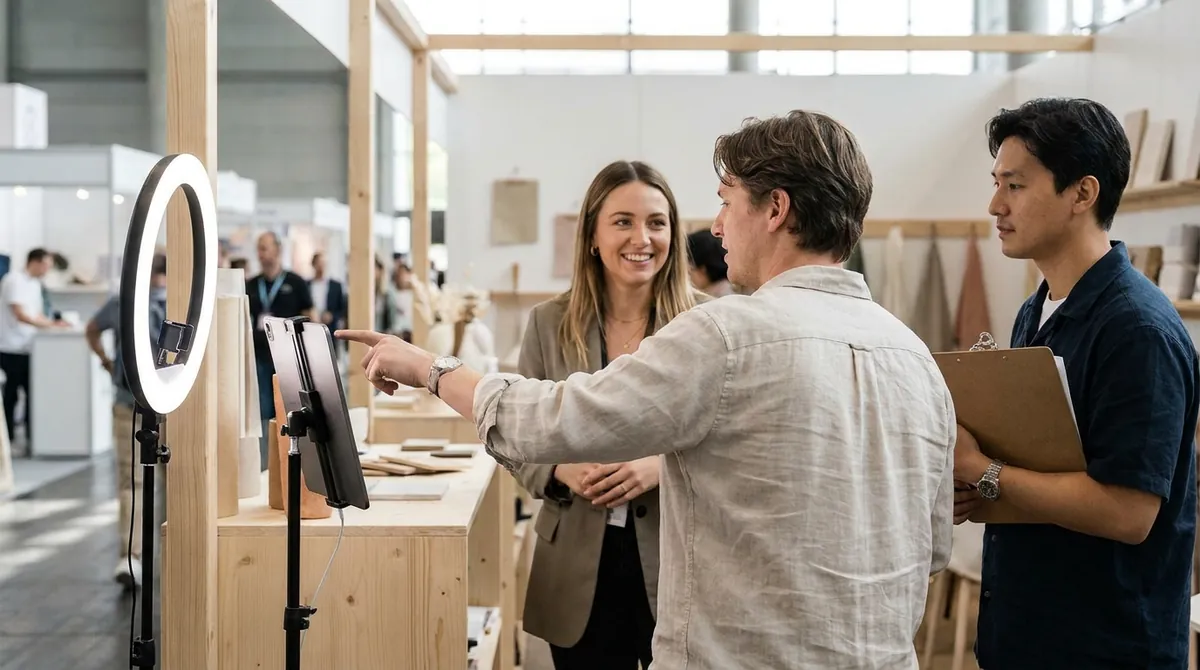
AI becomes expected, and it needs a label
Trend 4: AI moves from wow factor to normal
In Bizzabo's survey, 95% of organizers expected their use of AI in events to increase. The Knot's 2026 Real Weddings Study found AI use among engaged couples rose from about 20% to 36% during 2025. When clients plan with AI, an AI booth stops being a surprise and becomes a feature they compare.
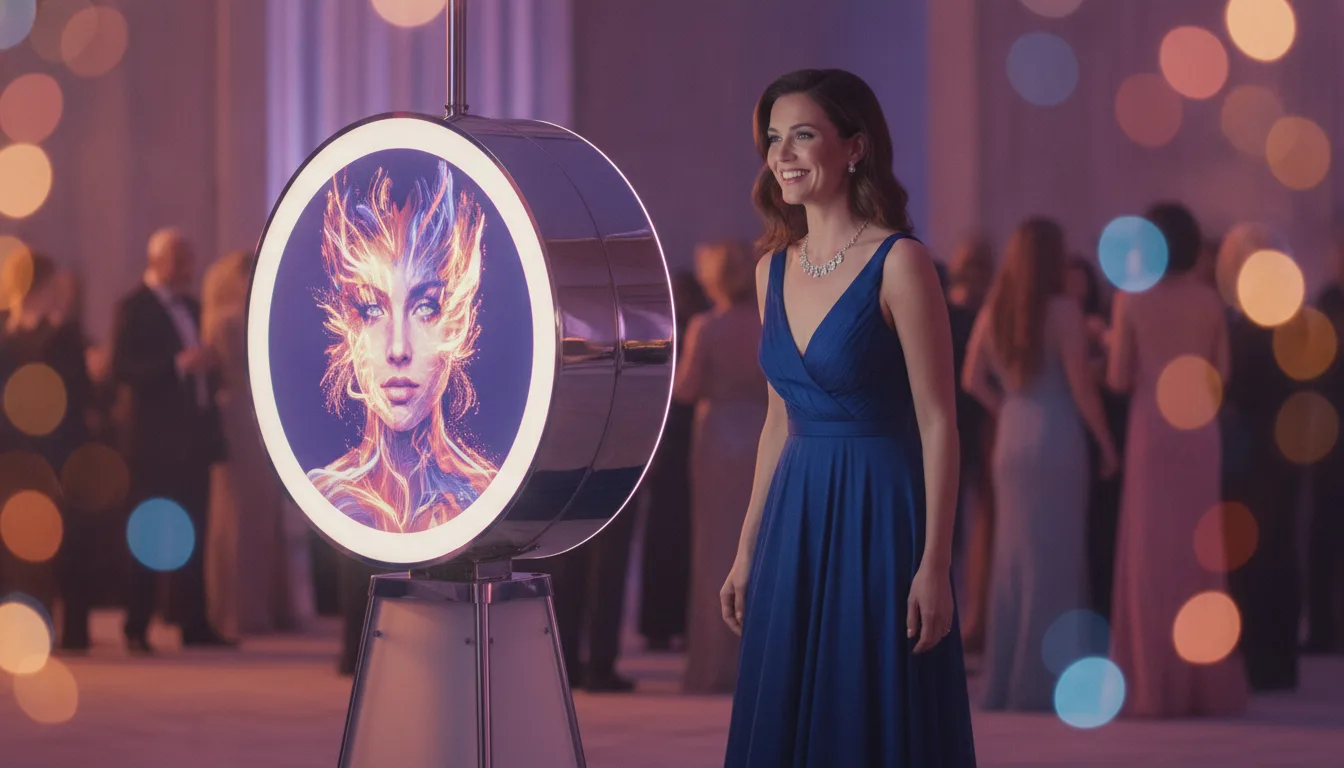
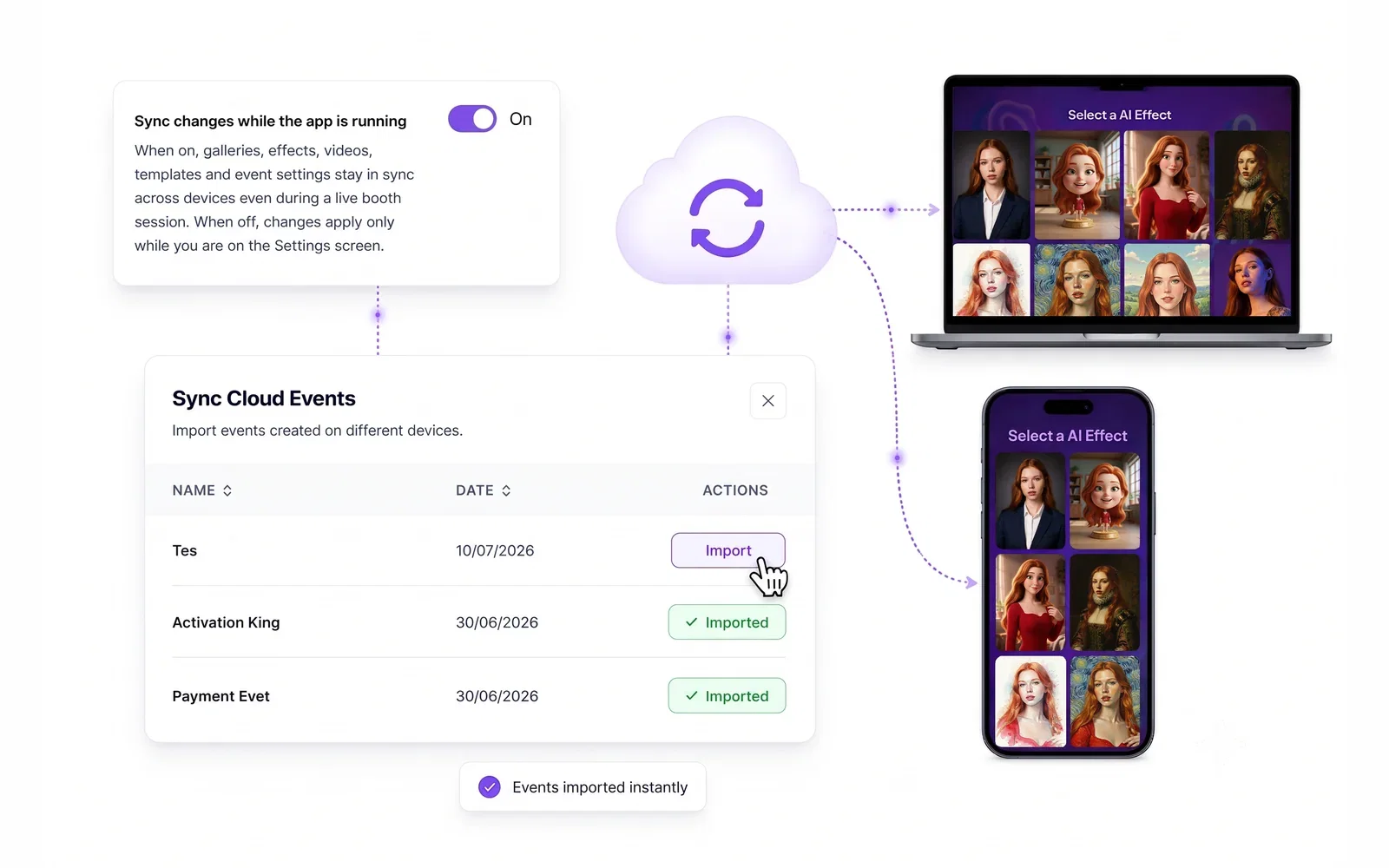
The honest counterpoint: novelty fades. A generic cartoon filter that drew a line in 2025 will feel familiar by late 2027. Booths that hold their price tie AI to the client: the product in every photo, the wedding's theme. AI Photo Booth Pro has 180+ ready-to-use AI effects, lets you create your own, and can use reference images to put a product in each guest photo:
AI features need a paid Pro plan or higher and an internet connection, so check the venue's network first.
New rules: AI images need disclosure in the EU
The EU AI Act's transparency rules (Article 50) apply from August 2, 2026. Deployers of AI that produces deepfakes, realistic images or video resembling real people, must disclose that the content is AI-generated or manipulated. For evidently creative work the duty is lighter: disclosing that AI was used, without spoiling the result.
What to do: for EU events, add a small "Created with AI" line to your AI templates. Custom output templates are included on all plans, so it is a one-time edit.
Try AI Photo Booth Pro free for 14 days
No credit card needed. Set up your first event in minutes.
Start Free TrialGuests share content, but they need a reason
Trend 5: Short video and instant sharing
EventTrack 2026 found that 59% of attendees capture content when they interact with brands at events, and 82% told friends or family who were not there. That favors outputs people post: short clips, GIFs and photos that turn into video.
The counterpoint is in the same survey: among reasons consumers engage with a brand at an event, "looks worthy of a social post" came last, behind free samples, discounts and prizes.
What to do: include one video output in every 2027 package. AI Video turns one photo into a short AI video (see AI video booth). And tie the booth to a giveaway the client already runs.
Trend 6: Digital first, print on request
73% of attendees told EventTrack they care about event sustainability, and 82% of Fortune 1000 companies have a sustainability policy or are working on one. Prints are still loved at weddings, but many corporate clients accept digital delivery.
What to do: price a digital-only package (QR code, email or SMS sharing) next to a print package. It also means fewer consumables and less to carry.

Weddings get more personal and more budget-aware
Trend 7: Candid, personal, and two wedding sizes
The Knot's 2026 study of 10,474 US couples reports that Gen Z is now 41% of the wedding market, 90% of couples aim for an authentic, personalized wedding, and couples tend to go either all-out or ultra-intimate. Photographers quoted in it describe a shift to candid, documentary-style photos.
Money is tight: roughly half said their starting budget was lower than reality, 41% went over budget, and nearly 55% reworked parts of their plan, such as removing favors. That pressure lands on extras like booths.
What to do: offer a short, digital-only package for small weddings and a premium one for big ones, and lean into candid formats like GIFs and a roaming iPad. Our photo booth rental pricing guide covers setting tiers.
Your 2027 checklist
| Trend | Action before the 2027 season |
|---|---|
| Normal-year budgets | Forecast from your own bookings, build a corporate prospect list |
| Leads as the main metric | Sell a lead capture package with a report |
| Consent rules | One-page consent and retention answer for clients |
| AI is expected | Client-specific effects, plus an AI label for EU events |
| Sharing | One video output per package, tied to a giveaway |
| Digital first | A digital-only tier next to print |
| Weddings | A small-wedding package and a premium tier |
One AI Photo Booth Pro subscription works on 2 devices at once in any platform mix, so a kiosk and a roaming iPad can cover a brand activation and a wedding the same weekend. Pro is $79/month or $699/year with unlimited events. Still choosing formats? Read AI vs traditional photo booth, then compare plans and pricing.
One plan, unlimited events
Pro is $79/month or $699/year, for 2 devices with AI effects, face swap and AI video.
View pricingSources
- PQ Media: Global Experiential Marketing Grew 8% to $139 Billion in 2025 and Will Surge 10% in 2026 (checked November 2026)
- Event Marketer and Sparks: EventTrack 2026 (checked November 2026)
- Bizzabo: Event Industry Trends 2026, What Event Professionals Are Reporting (checked November 2026)
- The Knot: 2026 Real Weddings Study (checked November 2026)
- EU AI Act Explorer: Article 50, Transparency Obligations (checked November 2026)
- Koley Jessen: New State Privacy Laws Effective January 1, 2026 (checked November 2026)