


A crowded event calendar is not a business model. The useful question for a photo booth operator is more specific: which experiences will buyers pay to add, and what evidence can you show before they book?
We reviewed three primary research sources for this 2026 industry snapshot. They point to opportunities around personalization, participation and reliable delivery. They do not establish the size of the photo booth market, the percentage of events booking a booth, or the revenue your business will earn.
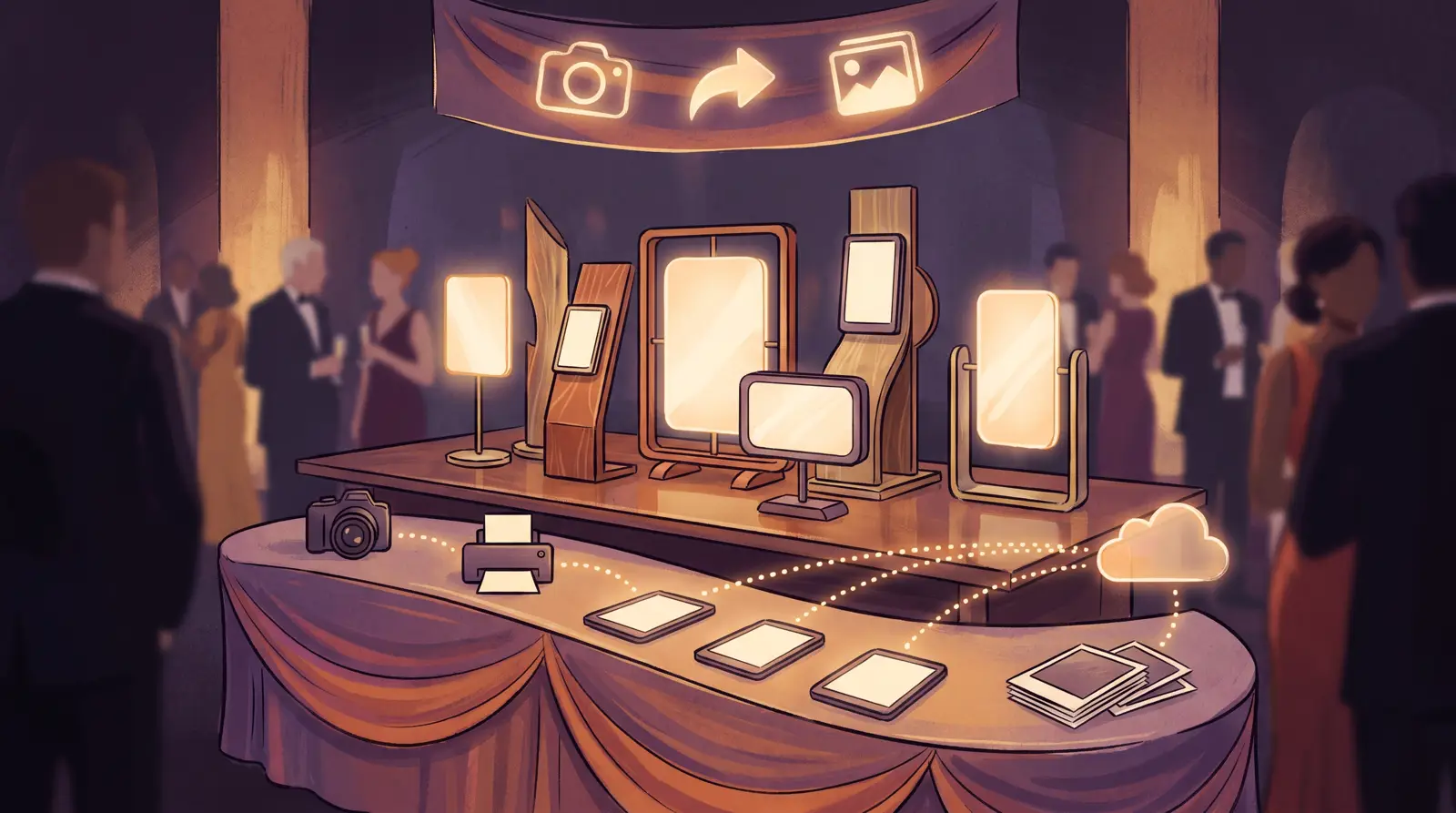
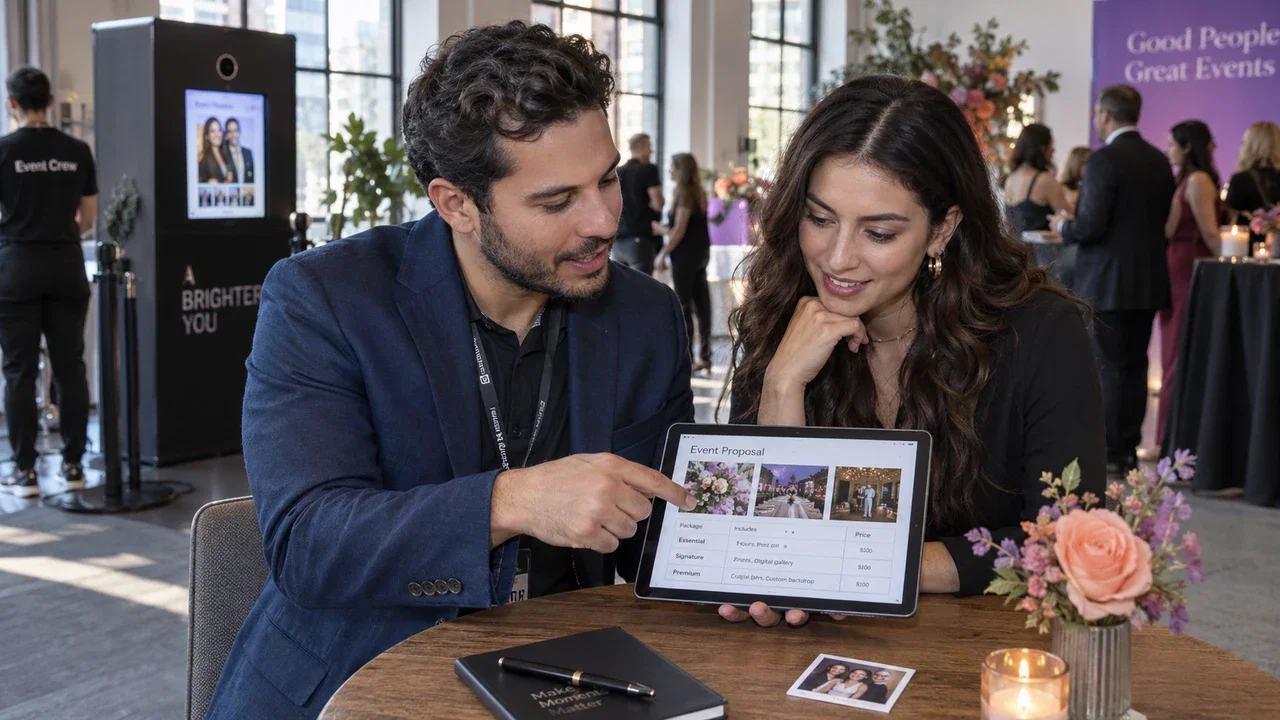
Cover: AI-generated editorial illustration, not a photograph of a customer event. Research checked on September 13, 2026.
Methodology: what this research can tell us
This is a desk review of publisher-issued research, not an Activation King customer survey. We selected sources with a stated audience and research period, retained those boundaries, and separated reported findings from our operating recommendations.
- The Knot Worldwide: its 2026 Real Weddings Study includes self-reported responses from 10,474 US couples married during 2025, recruited through The Knot and WeddingWire membership. The report also draws on additional studies, so not every finding shares that sample.
- Eventbrite: its 2026 Social Study surveyed 4,051 people aged 18–35 in the US and UK through dcdx, July 11–16, 2025. We use the survey, not platform keyword-growth figures.
- Amex GBT: its 2026 meetings and events forecast is based on a YouGov survey of 601 meeting professionals in eight countries, July 14–21, 2025. These are planners' expectations, not observed bookings for the full year.
Findings: three signals worth acting on
1. Wedding buyers are comparing more options
The Knot Worldwide reports that 37% of couples contacted more vendors than initially planned to find options within their budget.
US wedding research reported in the 2026 Real Weddings Study; not a photo booth booking rate. · Share of surveyed couples
The Knot Worldwide (2026)
Our interpretation: make the experience easier to evaluate. A gallery showing the actual output, a clear description of what is included and a concise explanation of the guest journey can be more useful than another claim about being the most innovative booth.
For a wedding proposal, show a coherent visual direction that fits the celebration: editorial portraits, a restrained illustration style or a personalized collectible. Keep the sales example close to what you can reliably deliver. An elaborate concept image is not a substitute for a tested result.
2. Younger audiences want to participate
Eventbrite reports that one-third of respondents wanted more opportunities to participate actively at future events rather than only watch.
Survey of adults aged 18–35 in the US and UK, collected in July 2025 for the 2026 Social Study. · Share of survey respondents
Eventbrite (2026)
Our interpretation: build a small creative decision into the booth experience. Let the guest choose a visual world, pose or character treatment. The result then reflects an action they took, rather than an effect that happened around them.
An AI trading card is a useful format to test: the person becomes the subject of a collectible. For a community event, the visual theme could reflect a shared interest. For a brand activation, the art direction could echo the campaign without filling the result with dense promotional text. These are creative proposals, not findings measured by the survey.
3. Planners are optimistic, but costs still matter
Amex GBT reports that 85% of meeting professionals surveyed were optimistic about the sector for 2026, while 38% identified cost as the leading challenge.
YouGov survey of 601 meeting professionals in eight countries, July 2025; expectations, not realized 2026 results. · Share of meeting-professional respondents
Amex GBT (2025)
Our interpretation: sell an outcome with an operational plan. Explain how guests enter, what they receive, how you handle busy periods, and what happens if the connection or equipment fails. A buyer evaluating costs needs to understand the service, not just see an impressive sample.
A corporate brief should distinguish a participation objective from a lead objective. A completed photo session is not automatically a qualified lead, a public social share or a sale. Promise only the measurement you can actually collect and reconcile.
Limitations: these are not photo booth market-size statistics
The sources cover different audiences, countries and questions. Their percentages cannot be averaged into a single demand score. Membership recruitment and self-reporting can affect results. The younger-adult survey does not represent all event guests, and planner sentiment does not guarantee future budgets.
Publication year is also not observation year: these 2026 reports mostly describe research collected in 2025. We deliberately do not convert total wedding spending into an addressable photo booth market or multiply audience preferences by an assumed booth price. That would add unsupported assumptions to credible research.
For your business, local venue relationships, event mix, travel distance, staffing and repeat clients may matter more than a broad industry headline. Use this research to choose a test, then use your own event records to decide what to keep.
Practical implications: turn the signals into one measurable pilot
- Choose one buyer and occasion. Write a brief for a wedding, a company event or a community gathering. Avoid trying to sell the same visual treatment to everyone.
- Produce a real output before promising it. Test framing, facial detail and any card border. Label concept art separately from product-generated results.
- Keep the guest journey focused. Begin with a small, coherent selection of looks. Watch for hesitation at the selection screen and revise the choices if they are confusing.
- Measure completion and delivery. Record sessions started, acceptable results completed, successful deliveries, retries and observed queue conditions. State how each metric is counted.
- Review the commercial outcome separately. Compare qualified enquiries, accepted proposals and actual event costs. Only connect these outcomes to the booth where your records support the connection.
For example, session completion rate can be defined as completed usable sessions divided by started sessions. Count retries consistently and explain whether one guest can start multiple sessions. Delivery success is a separate measure: a generated image that nobody receives is not the same outcome as a completed handoff.
Build a proof library, not just a mood board
After each test, keep the effect settings, an approved example, the output dimensions and a short note on what failed. Separate genuine product outputs, real-event photographs used with permission, and AI-generated editorial illustrations. That distinction makes future proposals faster to assemble and harder to misunderstand.
AI Photo Booth Pro can be part of that testing workflow. Start with a single photo experience, confirm the result on your own setup, and expand the creative range after the capture-to-delivery path is dependable. The opportunity is not simply to add more effects; it is to offer an experience a buyer understands and a guest wants to finish.
Explore AI Photo Booth Pro or Start Free to begin building your first test.